 Become A Jaguar
  Request Info
  Apply
Apply  Get Game Tickets
About the Master of Science in Computer Science Program
Welcome to the Master of Science in Computer Science program (MSCS) at Texas A&M University - San Antonio. The program is designed to prepare graduate students with the necessary knowledge and skills in current computing and information systems as required by business, government, and academic research.
The program offers course in specific current technology fields including cybersecurity, mobile computing, big-data systems, cloud-based systems and enterprise systems.
Career Opportunities
- Software Developer
- Network Administrator
- Research Computing Researcher
- Cybersecurity Researcher
- Data Analyst
Application Instructions
- Complete the GradCAS application
- Submit application fee ($49 for domestic; $69 for international)
- Submit the following required documents:
- Official e-transcripts from all US institutions attended are to be sent to GradCAS through their online order portal. If your institution does not have official e-transcripts available, they can be mailed to the GradCAS processing center.
- International student submission details can be found here.
- Official e-transcripts from all US institutions attended are to be sent to GradCAS through their online order portal. If your institution does not have official e-transcripts available, they can be mailed to the GradCAS processing center.
- Curriculum Vitae or résumé
- Supplemental Information Form:
- We strongly encourage contacting potential faculty mentor(s) prior to applying to the program to ensure sufficient space in Faculty labs and compatibility of research interests. Please select up to three faculty members in ranking order of priority.
- Thesis Track Applicants: This form will also be used to indicate if they would like to be considered for a Graduate Assistantship.
Scholarships
Prerequisites
- BS in Computer Science
- 3.0 composite GPA from upper division Math or Computer Science classes
Conditional Admittance
- 2.5-3.0 composite GPA (Computer Science degree)
- 3.0 composite GPA from undergraduate degree other than Computer Science
The Department has the right to examine students’ prerequisites, accept equivalent hours, or require additional work.
*Students falling below the GPA minimum are encouraged to apply. Students are evaluated holistically based on several criteria.
Program Details
Courses Offered
- Face-to-face
- Flexible full-time or part-time enrollment
Degree Tracks
- Thesis Track: 30 credit hours (CH)(including 6 hrs of thesis work)
- Non-Thesis Track: 30 CH
Two Concentrations
- Computer Science
- Computer Information Systems
Average Time to Complete: 1.5 Years
Degree Pathways
- B.S.
- B.B.A.
Affiliated Faculty

Dr. Izzat Alsmadi
Research Areas: Cyber intelligence, Cyber security, Software security, software engineering, software testing, social networks and software defined networking.
Office: SciTech 211F
Contact: ialsmadi@tamusa.edu
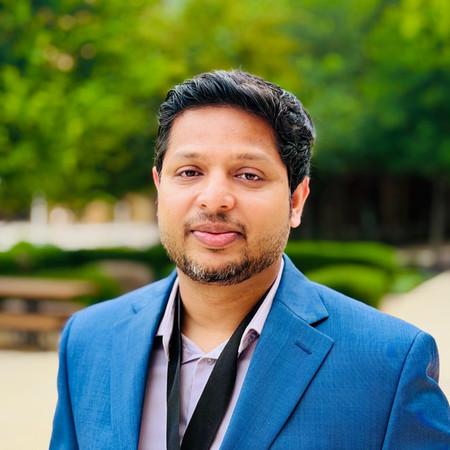
Dr. Md Tamjid Hossain
Research Areas: Secure and trustworthy cybersecurity and AI/ML applications, adversarial machine learning, federated learning, reinforcement learning, blockchain, and critical infrastructure security.
Office: SciTech 211J
Contact: mhossain@tamusa.edu

Dr. Young Lee
Research Areas: Program analysis, machine learning and AI safety, system software security, and software visualization.
Office: SciTech 211E
Contact: ylee@tamusa.edu
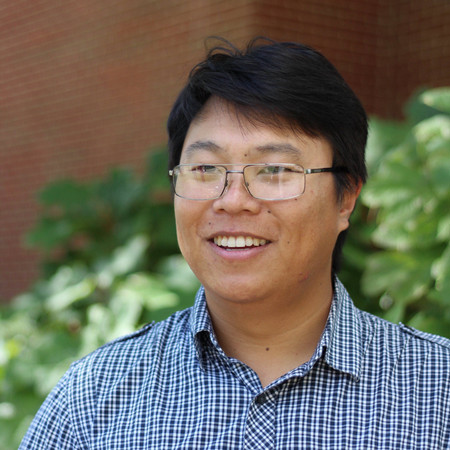
Dr. Gongbo Liang
Research Areas: Computer Vision, LLMs, Generative AI, Machine Learning, Multimodal Integration, Trustworthy/Responsible Neural Networks, Domain-Specific AI.
Office: SciTech 211G
Contact: gliang@tamusa.edu
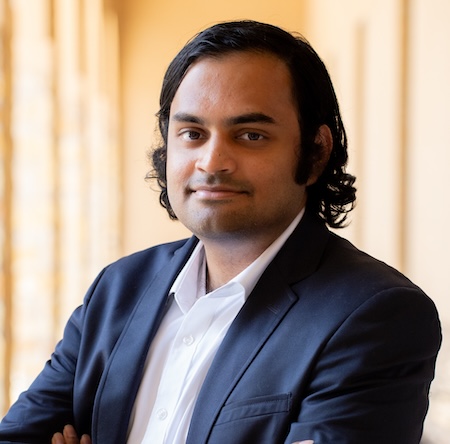
Dr. Srinivasan Murali
Research Areas: CyberSecurity (Hardware, Internet of Things, Cyber-physical systems, GenAI, Usable Security), Ubiquitous Computing, Extended Reality.
Office: SciTech 211H
Contact: smurali@tamusa.edu

Dr. Jeong Yang
Research Areas: Mitigating adversarial attacks on LLMs in software security, Improving the efficiency of auto-code generated by language models (LLMs and SLMs), Intelligent applications of cloud-based AI services to discover effective use of AI technologies, and Software supply chain security utilizing a static analysis framework with source code clone detection techniques.
Office: SciTech 211R
Contact: jyang@tamusa.edu
Student Organizations