
 Become A Jaguar
  Request Info
  Apply
Apply  Get Game Tickets
 Faculty Mentors
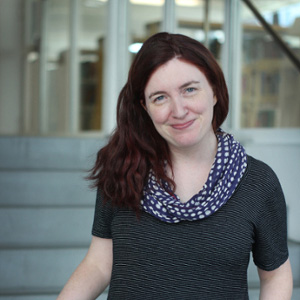
Davida Smyth
View More
Dr. Smyth is currently serving as the faculty liaison from A&M-SA to SARA for the Espada project. She is equipped to determine what is available and needed to support this project's success. Her lab investigates the diversity of pathogens in the built environment from surfaces, in the soil, air, and in water and wastewater and uses a combination of classical microbiology, next-generation sequencing, and computational methods to determine the identity of the microbes present. Since joining A&M-SA, she has mentored over 50 undergraduate researchers across A&M-SA. She is developing several classroom-based undergraduate research courses including Tiny Earth in microbiology, Phabulous Phage modules as part of Virology, and the Microbiome of Urban Spaces in Bacteriology.
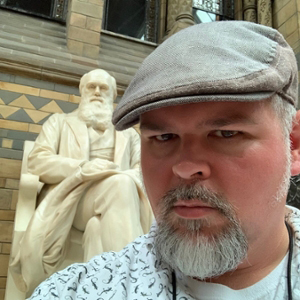
Charles M. Watson
View More
The Watson Integrative Ecology Laboratory uses lab-based physiology experiments, field sampling, museum collections, and spatial data to investigate such diverse topics as the evolution of viviparity and the fitness benefits of decoy coloration in lizards. The lab maintains local and international collaborations with academic and professional colleagues through outreach, research, and conservation efforts. Dr. Watson has directly mentored a diverse group of students, including 35+ undergraduate researchers and 16 graduate (MS) students, and hosts 8 undergraduates and 5 graduates currently.
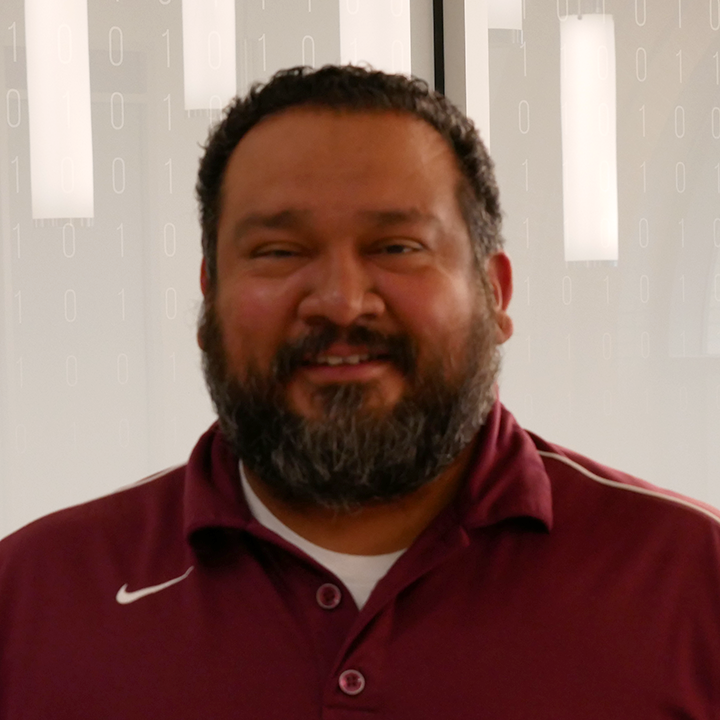
Chris Mares
View More
Dr. Mares’ lab uses various in vitro and in vivo models to study the host response to infection. Dr. Mares’ lab is particularly interested in the development of non-vertebrate models of infectious disease including the use of Galleria mellonella. His lab uses standard microbial and molecular techniques such as western blotting, survival assays, immunofluorescent staining, and various other histopathological techniques. Dr. Mares has mentored 23 students over the past several years with many of them eventually attending various graduate and professional schools.
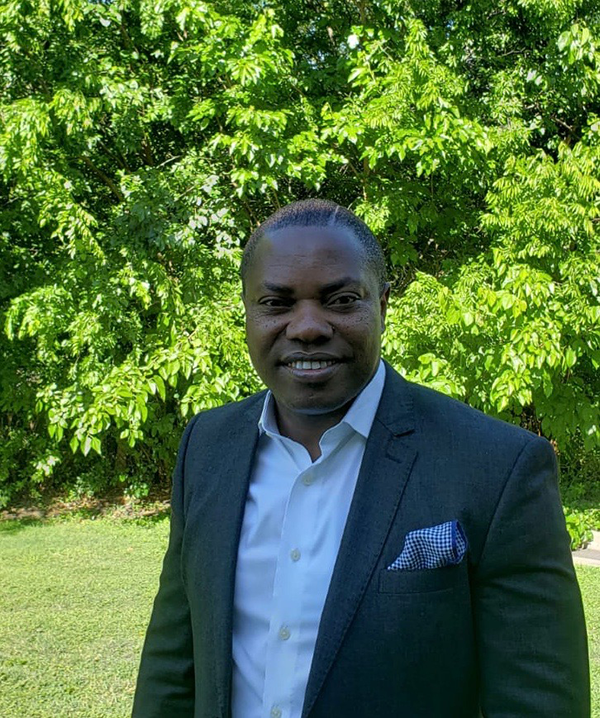
Pride Abongwa
View More
Dr. Abongwa’s lab focuses on measuring metals and anions in aqueous solutions using an ICP-OES and an IC. The results are analyzed and modeled using a 3D model (The Geochemist Workbench) which has the capability of modeling the transport of contaminants in the environment. In addition, physical parameters such as pH, TDS, ORP, and temperature, and in situ using a multi-parameter probe are measured. Dr. Abongwa has mentored 7 undergraduate students of whom 2 have gone on to complete master’s degrees and over 4 have gone into industry. Students in Dr. Abongwa’s lab will join projects and learn field and laboratory experimental design skills, how to run laboratory equipment and generate data that will be used to analyze surface water and groundwater quality.
Walter Den
View More
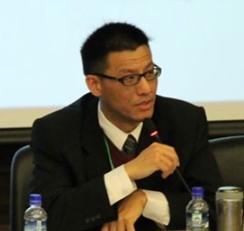
Dr. Den is the principal investigator of the Water Resources Lab at A&M-SA. Dr. Den has mentored (past and present) more than 50 graduate students over his career, including eight students for the Water Resources graduate program over the past four years since the program started at Texas A&M-San Antonio in 2019. During that span, his lab also hosted about ten undergraduate research students. Students participated in research areas in
- Industrial effluent purification and reuse chemically, electrolytically, and biologically;
- Characterization of naturally occurring and anthropogenic pollutants in the San Antonio River;
- Phytoremediation of polluted lakes.
He has also secured funded projects to develop aquatic science and aquifer protection training programs that benefit graduate and undergraduate students. His students matriculating through the bachelor's and master's programs have a track record of being employed by local, state, and national agencies upon graduation including 3 currently employed at SARA.

Elizabeth Borda
View More
The Borda Lab is currently conducting collaborative research integrating DNA Barcoding, environmental DNA, and whole-organism community DNA to establish an ecological baseline against the ongoing urbanization of San Antonio. Dr. Borda has extensive programmatic experience related to increasing research opportunities for students as a former co-PI and coordinator of REU Site OCEANUS (#1560242), chair of Undergraduate Research at TAMU-Galveston, and currently serves as the Graduate Coordinator of Biology of the first graduate program at the master’s level at A&M-SA. Dr. Borda has mentored 3 Ph.D. students, 10 MS students, and over 40 undergraduates throughout her career. An NSF award with WHOI funds postdoctoral and master’s level research and Borda as co-PI (BIO-OCE #2136322).
Jose Rodolfo Valdez Barillas
Jose.ValdezBarillas@tamusa.edu
View More
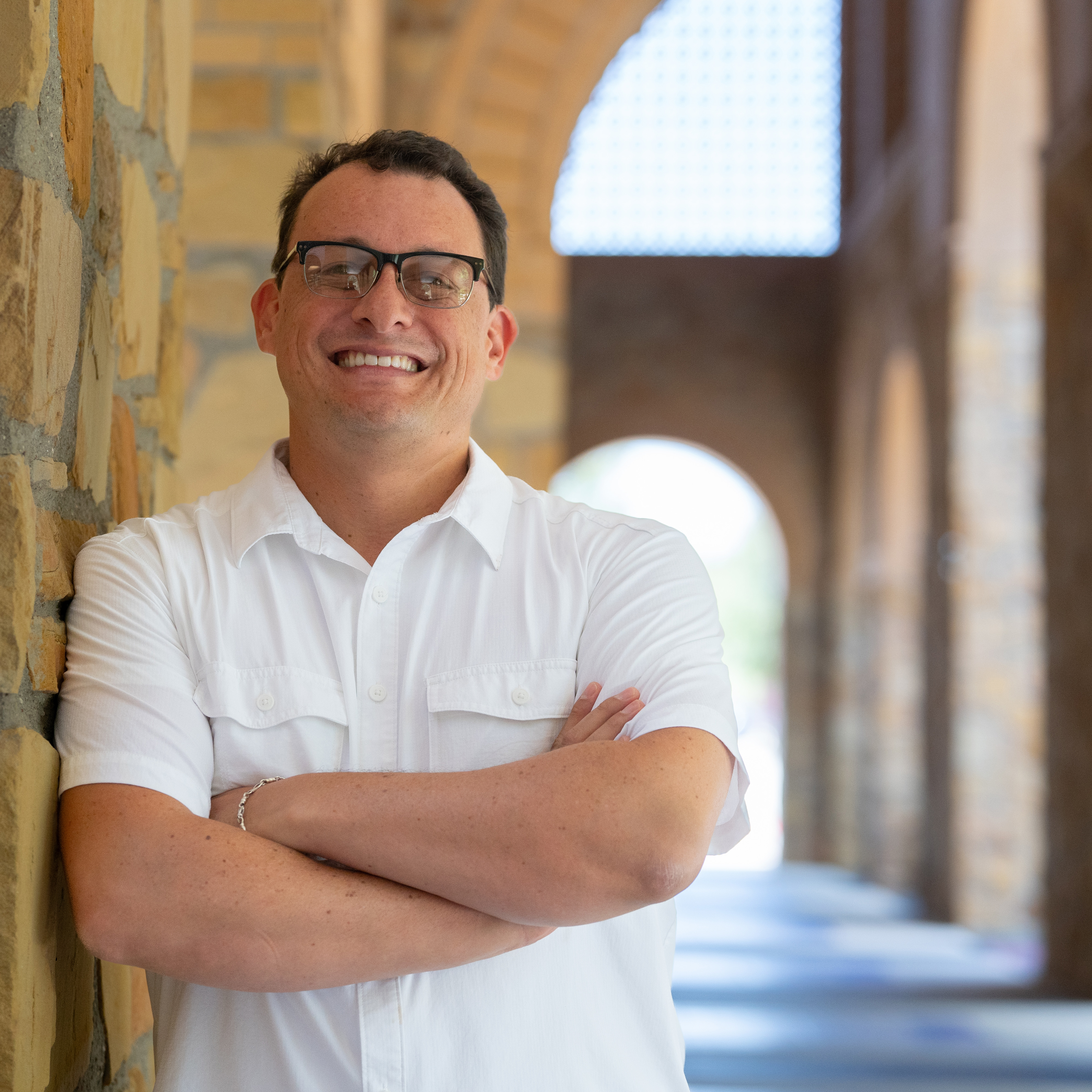
Dr. Valdez Barillas is studying the dynamics of aquatic invertebrate taxa in response to extreme weather events and anthropogenic activities in the upper San Antonio River. With the help of his graduate students, he is also studying the role that pathogenic and/or beneficial microbes play in the ecology of plant-microbe-insect interactions, particularly in Texas grasslands dominated by invasive species, and neighboring agricultural lands. Such knowledge will be useful when restoring these areas with native grass species, particularly in riparian and upland ecosystems. Dr. Valdez Barillas has mentored over 40 undergraduate students and 4 graduate students. He is a co-PI and mentor of undergraduate students as part of the A&M-SA NSF-S STEM and NSF-HSI A&M-SA grants.
Ashley Teufel
View More
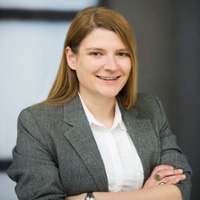
The Teufel Lab focuses on mathematical and computational modeling of evolutionary and ecological systems with a particular focus on mechanistic modeling of functional divergence in genomes, viral evolution, and resilience of complex systems. She has mentored 8 graduates, 15 undergraduates, and 1 high school student (10 at A&M-SA), leading to two student-authored publications, one concerning methodologies for computational protein design and the other on measuring resilience in protein-protein interaction networks. In addition, Dr. Teufel will support data management and sharing with SARA and the community via websites and data repositories and use of the local server support at A&M-SA.
Uptal Smart
View More
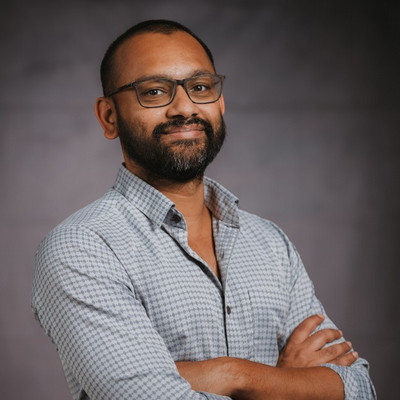
The Smart Molecular Ecology Lab investigates the genetic and ecological processes that shape species diversity through the lenses of population genetics, phylogenetics, and biogeography, with a primary focus on reptiles and amphibians. Utilizing molecular techniques, field research, and computational methods, the lab aims to understand how threatened species evolve and adapt to their environments. Work is supported by collaborations with national institutions such as the University of Texas, Texas State University, and the University of North Texas, as well as international projects in Ecuador and Indonesia, emphasizing scientific advancement, conservation, and community engagement. Dr. Utpal, recently appointed as an assistant professor at A&M-SA, has mentored several undergraduate and graduate students during his six years as a postdoc and is excited to continue guiding students in this new role.
Robert Shelton
View More
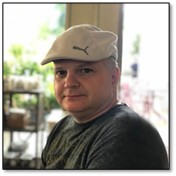
Dr. Shelton is Program Coordinator for physical sciences at A&M-SA and has mentored 4 undergraduate student research projects at A&M-SA which have resulted in student presentations at local, regional, and national ACS meetings, and as part of his role as program coordinator of the new Bachelor’s degree in Chemistry is working on ways to incorporate undergraduate research at all levels of the curriculum. Dr. Shelton will leverage his expertise in chemistry and chemistry education research to help develop a secure and compliant method to track students as they progress through the project, graduate, and enter their chosen careers. Dr. Shelton will also assist in the customizing and collection of STEM-PIO-1, CIMER, and URSSA data followed by processing, analyzing, and disseminating the results.
Peer Mentors
Current master’s students from the faculty research mentors' labs will serve as peer mentors. A module on peer mentoring again developed from CIMER materials will be integrated into the existing Graduate Student Scholarship course that all graduate students take at A&M-SA. In May, they will attend a half-day orientation to prepare for the arrival of the REU participants. An additional benefit of this project will be the development of mentoring and leadership skills among our peer mentors.
 Sponsored by the National Science Foundation #2447305.